Hiragana and
Katakana Chart:
Side-by-Side Kana,
Romaji, and Practice
Order
A hiragana and katakana chart is most useful when it lets you compare the same sound row in both scripts. This guide puts the two kana systems side by side, adds romaji only as a short pronunciation bridge, and shows when each script appears in real Japanese. Use the chart to recognize patterns first, then move into words, loanwords, and short reading practice.
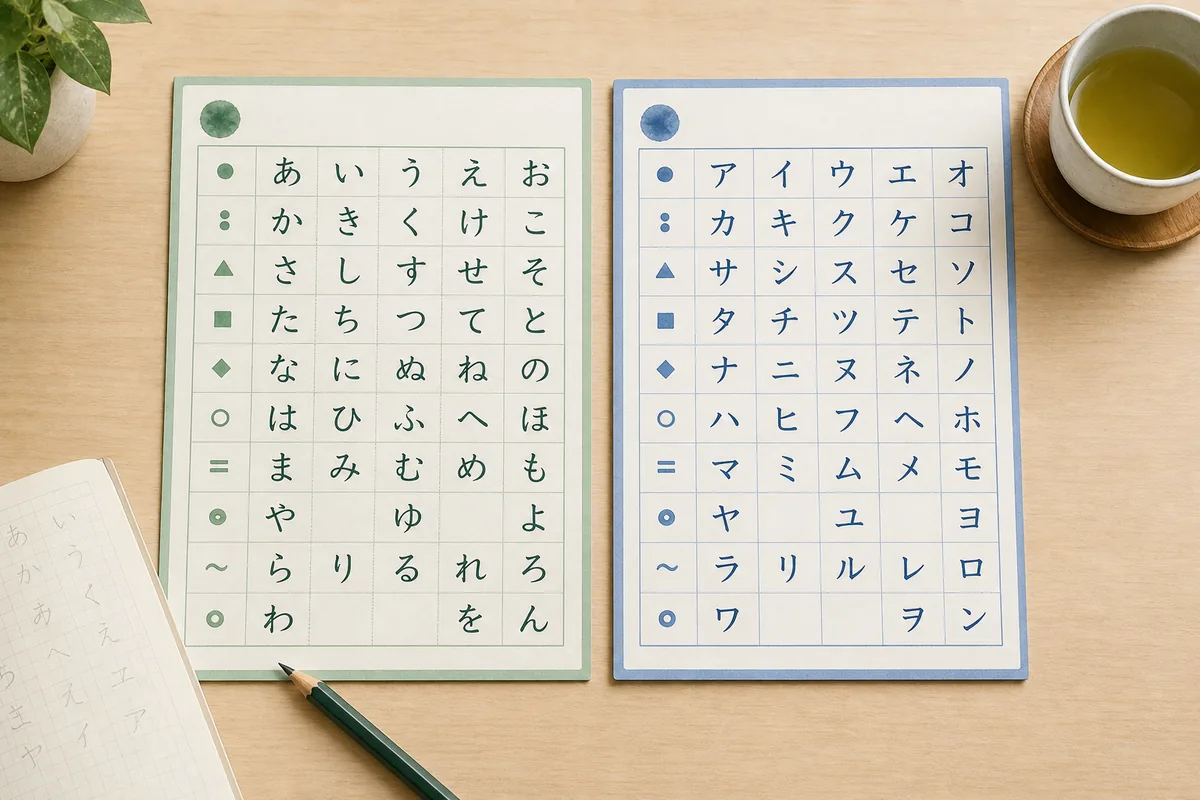
Hiragana and katakana chart at a glance
The table below pairs the basic gojuon rows. The word “gojuon” means “fifty sounds,” but the modern basic chart has empty-looking cells because Japanese does not use every possible consonant-vowel combination. Learn the row rhythm and the matching position before worrying about every special form.
| Sound row | Hiragana | Katakana | Romaji | Practice cue |
|---|---|---|---|---|
| Vowels | あ い う え お | ア イ ウ エ オ | a i u e o | Start here and keep the vowel order visible. |
| K row | か き く け こ | カ キ ク ケ コ | ka ki ku ke ko | Compare the same five positions across both scripts. |
| S row | さ し す せ そ | サ シ ス セ ソ | sa shi su se so | Remember し and シ are both read shi. |
| T row | た ち つ て と | タ チ ツ テ ト | ta chi tsu te to | Give ち/チ and つ/ツ extra contrast practice. |
| N row | な に ぬ ね の | ナ ニ ヌ ネ ノ | na ni nu ne no | A regular row that works well for handwriting drills. |
| H row | は ひ ふ へ ほ | ハ ヒ フ ヘ ホ | ha hi fu he ho | ふ and フ are commonly written as fu in romaji. |
| M row | ま み む め も | マ ミ ム メ モ | ma mi mu me mo | Say the vowel sequence aloud as you point across. |
| Y row | や ・ ゆ ・ よ | ヤ ・ ユ ・ ヨ | ya yu yo | There are no modern basic yi or ye cells. |
| R row | ら り る れ ろ | ラ リ ル レ ロ | ra ri ru re ro | Listen for the light Japanese r sound. |
| W row | わ ・ ・ ・ を | ワ ・ ・ ・ ヲ | wa wo | を is usually pronounced o when used as a particle. |
| Final nasal | ん | ン | n | It is the basic nasal sound at the end of the chart. |
What is the difference between hiragana and katakana?
Hiragana and katakana are both kana scripts. They encode the same basic sound system, so あ and ア both represent a, while き and キ both represent ki. The practical difference is where you usually see them. Hiragana is common in grammar endings, particles, native Japanese words, and beginner reading. Katakana is common in loanwords, many foreign names, brand names, onomatopoeia, and visual emphasis.
| Study question | Hiragana | Katakana |
|---|---|---|
| What does it usually signal? | Grammar, native Japanese vocabulary, and beginner reading. | Loanwords, foreign names, product names, sound effects, and emphasis. |
| Example | さかな (sakana, fish) | テレビ (terebi, television) |
| Should I translate the script? | No. Read the kana as a sound pattern. | No. Identify the word source and learn the katakana shape. |
| Best next step | Read short native words and particles. | Practice familiar loanwords and long-vowel patterns. |
This is a usage tendency, not an absolute rule. Japanese can use katakana for emphasis, foreign-looking sound effects, or a stylistic choice, and some words are written in more than one way. The chart helps you identify the script; the surrounding word and sentence tell you how it functions.
Dakuten, handakuten, and combined kana
After the basic rows, add the marks and small kana that extend the same sound system. Learn them as transformations rather than as a brand-new alphabet. The matching position stays visible, which is why a side-by-side chart is useful even after the first study session.
| Base | Hiragana extension | Katakana extension | Romaji |
|---|---|---|---|
| K row | が ぎ ぐ げ ご | ガ ギ グ ゲ ゴ | ga gi gu ge go |
| S row | ざ じ ず ぜ ぞ | ザ ジ ズ ゼ ゾ | za ji zu ze zo |
| T row | だ ぢ づ で ど | ダ ヂ ヅ デ ド | da ji/di zu/du de do |
| H row | ば び ぶ べ ぼ / ぱ ぴ ぷ ぺ ぽ | バ ビ ブ ベ ボ / パ ピ プ ペ ポ | ba bi bu be bo / pa pi pu pe po |
| K/S/T combinations | きゃ きゅ きょ / しゃ しゅ しょ / ちゃ ちゅ ちょ | キャ キュ キョ / シャ シュ ショ / チャ チュ チョ | kya kyu kyo / sha shu sho / cha chu cho |
The small っ and ッ mark a brief pause or a doubled consonant, as in きって (kitte). Katakana also uses the long-vowel mark ー often, especially in loanwords such as ケーキ (keeki, cake) or コンピューター (konpyuutaa, computer). Hiragana usually writes a long vowel with another kana instead, although the exact spelling depends on the word.
How to use the chart in real Japanese words
A chart should move you from recognition to reading. Pick one row, point to a kana, say the sound, and then find that character inside a short word. Repeat the same word in both scripts only when a katakana version is natural; do not force every Japanese word into katakana just because the two charts match.
For vocabulary with meanings and romaji, continue to the Hiragana Words guide. For reading strings of kana instead of single symbols, use hiragana reading practice. If you are learning through word games, the Japanese Wordle guide explains why fixed-length kana patterns need a different kind of recall.
Which script should you learn first?
Most beginners start with hiragana because it appears constantly in grammar and simple reading material. That does not mean katakana should wait for months. Once you can recognize the basic hiragana rows, add the matching katakana rows in small groups. The shared sound order reduces the amount of new pronunciation you need to learn, while the different shapes give you a useful memory test.
- Learn the five vowels in hiragana and katakana together.
- Add one consonant row in hiragana, then compare its katakana row.
- Read a native Japanese word and a familiar loanword when possible.
- Review confusing shapes by contrast instead of copying the whole chart.
- Introduce dakuten, small kana, and long vowels after the basic rows are stable.
A seven-day practice order
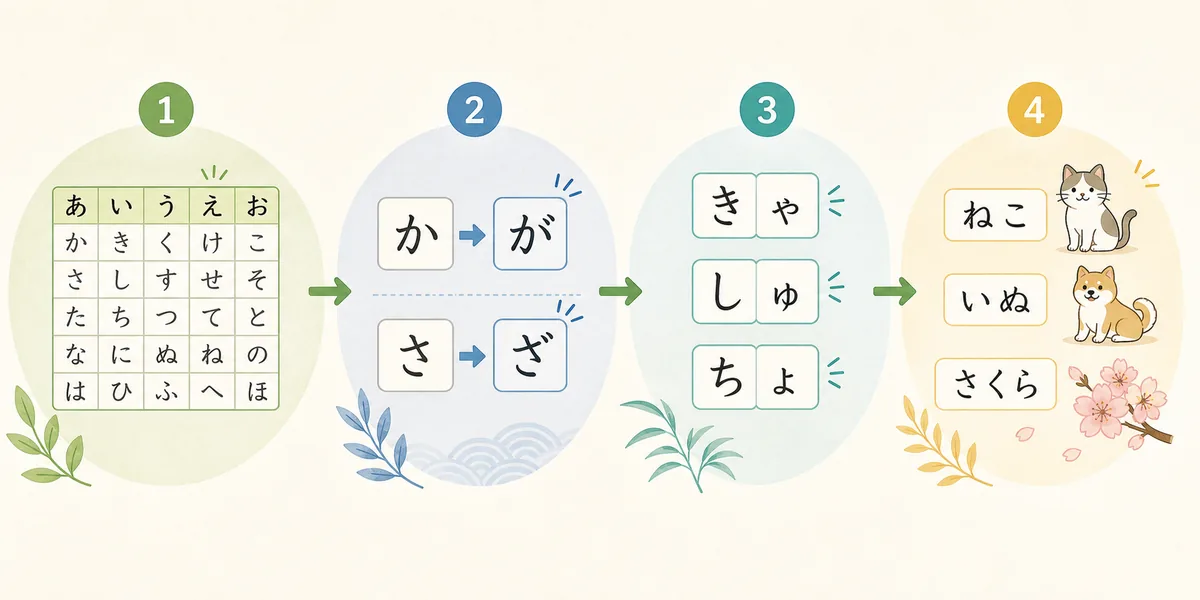
Ten focused minutes is enough for a first cycle. Review yesterday’s row, learn a small new group, and finish with five words. When two forms look similar, write them together and say the difference: さ/き, ぬ/め, れ/ね, シ/ツ, or ソ/ン. Contrast is more memorable than repeating a long list with no decision to make.
Printable and mobile-friendly chart use
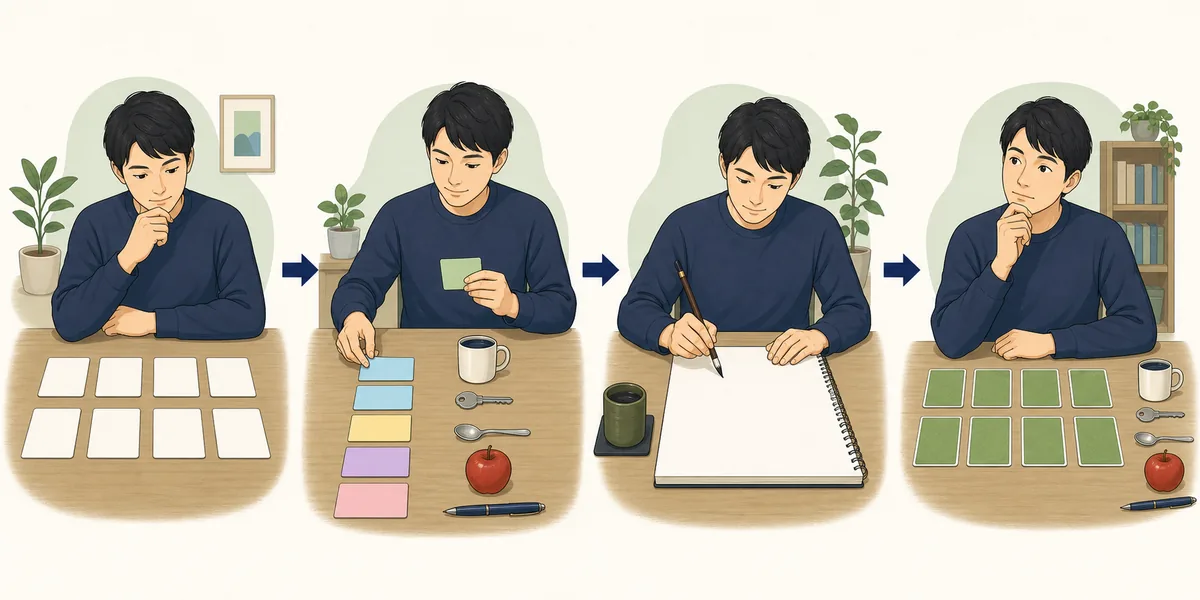
You can print this page from your browser when you want a paper reference. Landscape orientation is usually easier for the full side-by-side table. On a phone, swipe the table horizontally instead of shrinking the text until the kana become hard to distinguish. Printing is a convenience, not a replacement for reading practice: mark only the rows you still confuse and return to those rows the next day.
FAQ
What is the difference between hiragana and katakana?
They represent the same basic Japanese sound rows, but their shapes and common uses differ. Hiragana is common for grammar and native Japanese words; katakana is common for loanwords, many foreign names, sound effects, and emphasis.
Should I learn hiragana or katakana first?
Start with hiragana if you are a complete beginner, then add katakana soon after the basic rows. Learning matching rows together lets you reuse the same pronunciation pattern while practicing a new visual form.
Do hiragana and katakana have the same sounds?
Yes. あ and ア both represent a, and か and カ both represent ka. The script does not change the basic sound; the word, spelling convention, and surrounding sentence determine how it is used.
Can I print this hiragana and katakana chart?
Yes. Use the print button or your browser’s print command. Landscape layout usually gives the comparison table more room, while the mobile layout is designed for horizontal scrolling on a small screen.
Do I need to learn dakuten and small kana at the same time?
No. Learn the basic rows first, then add voiced marks, handakuten, small ゃ・ゅ・ょ, っ, and long vowels as a second layer. Always compare the extended form with its base kana.
Summary
A useful hiragana and katakana chart does more than list symbols. It shows the shared sound order, makes the visual difference between the two scripts easier to remember, and leads you toward words you can actually read. Use hiragana as your first reading foundation, add katakana for loanwords and names, and keep romaji temporary.
When you are ready for more detail, use the dedicated hiragana chart and katakana chart pages for script-specific notes. When you want to turn chart recognition into play, try Kotobade Asobou and pay attention to the kana sequence inside each word.
Sources and further reading
The row order and kana examples were checked against MARUGOTO Plus from the Japan Foundation and its kana drill. Beginner script explanations were compared with Tofugu’s Learn Hiragana guide. This page reorganizes the shared fundamentals into a crawlable, print-friendly comparison and does not replace audio or teacher feedback for pronunciation.
Practice Japanese word shapes
After reviewing a few chart rows, use a short browser game to test whether you can recognize kana in sequence. Kotobade Asobou gives you a compact way to practice Japanese word shapes and vocabulary recall.
Play Kotobade Asobou