Hiragana Words: Common Japanese Words in Hiragana
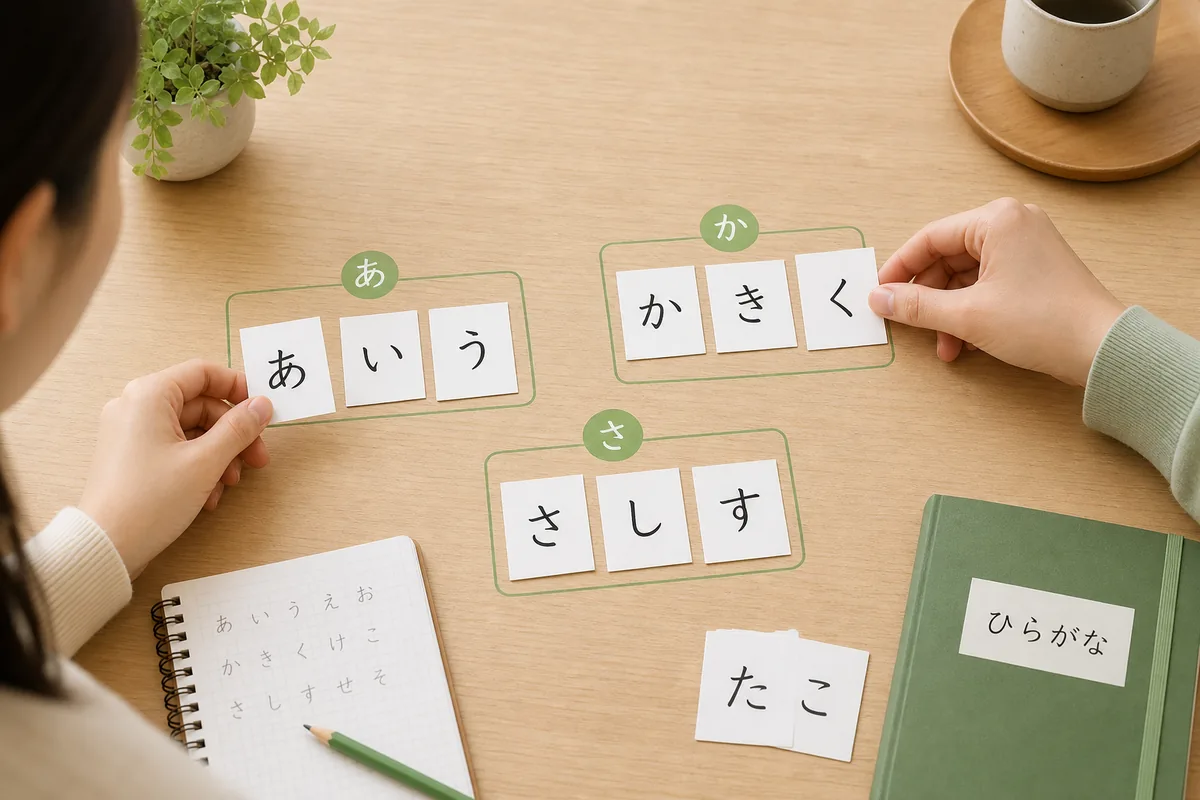
Hiragana words are the best bridge between memorizing the kana chart and actually reading Japanese. Instead of learning あ, い, う as isolated symbols forever, you start seeing them inside real words such as あお, いえ, ねこ, みず, and ありがとう. This guide gives you common Japanese words in hiragana, explains which words are good for beginners, and shows how to review them through short word games.
What counts as a hiragana word?
A hiragana word is simply a Japanese word shown in hiragana. Some words are normally written in hiragana, especially particles, basic function words, and many beginner expressions. Other words may appear in kanji in native materials but are often shown in hiragana for learners. For example, いぬ can be written as 犬, but a beginner vocabulary list may show いぬ first so the learner can practice reading kana.
This distinction matters because a search for "hiragana words" can mean several things: words written only with hiragana, common Japanese vocabulary displayed in hiragana, or short kana words for a classroom or word game. This page focuses on practical beginner reading. It keeps kana visible, includes romaji when helpful, and gives English meanings so you can review without switching between several resources.
If you need the full reference before studying vocabulary, start with the hiragana chart for the 46 basic characters, dakuten, and combined sounds, then return here to practice those kana inside real words.
Hiragana is the foundation script for Japanese learners. Tofugu's hiragana guide frames it as an early foundation for pronunciation and reading, while Tae Kim's guide explains that hiragana represents Japanese sounds. The practical next step is turning those sounds into words you can remember.
Start with short kana-only words
Short words are useful because you can read them without losing track of the kana. They are also good for warm-up rounds before longer vocabulary study. Do not worry if a word can also be written with kanji; at this stage, the point is to practice the hiragana reading and connect it to a meaning.
| Hiragana | Romaji | Meaning | Practice note |
|---|---|---|---|
| あお | ao | blue | Good for vowel sequence practice |
| いえ | ie | house / home | Very short, two clear vowel sounds |
| うえ | ue | up / above | Useful contrast with した |
| ねこ | neko | cat | Easy animal word |
| いぬ | inu | dog | Common beginner noun |
| そら | sora | sky | Simple two-kana word |
| くも | kumo | cloud / spider | Shows why context matters |
| はな | hana | flower / nose | Another context-dependent word |
Common Japanese words in hiragana
After the shortest words, add everyday words that appear across greetings, classroom phrases, and simple conversations. Some of these are written in hiragana very often; others may later appear with kanji, but seeing them in hiragana first helps beginners build reading speed.
For a broader beginner vocabulary path that includes romaji, English meanings, verbs, adjectives, food, places, and time words, use the full Basic Japanese Words guide. This page is narrower: it focuses on words that help you practice reading hiragana itself. When you want to check the characters before reading a list, use the hiragana quiz for a short recognition round.
Greeting words written in hiragana
Greetings are longer than the first short nouns, but they are worth learning early because they appear in almost every beginner resource. Lists from language schools and learning sites often start with こんにちは, ありがとう, すみません, and おはようございます because they are reusable in real interactions.
| Hiragana | Romaji | Meaning | Use |
|---|---|---|---|
| こんにちは | konnichiwa | hello / good afternoon | General daytime greeting |
| こんばんは | konbanwa | good evening | Evening greeting |
| おはよう | ohayou | good morning | Casual morning greeting |
| ありがとう | arigatou | thank you | Casual thanks |
| すみません | sumimasen | excuse me / sorry | Getting attention or apologizing |
| ごめんなさい | gomennasai | I am sorry | Direct apology |
| おねがいします | onegaishimasu | please | Polite request |
| さようなら | sayounara | goodbye | Formal farewell |
Two-, three-, and four-kana words for practice
Word length changes the type of practice. Two-kana words are good for reading speed. Three-kana words are better for meaning recall. Four-kana words start to feel like a word game because you must hold the whole shape in memory.
| Length | Examples | Best use |
|---|---|---|
| 2 kana | あお, いえ, うえ, ねこ, いぬ | Fast kana recognition and first vocabulary cards |
| 3 kana | そら, くも, はな, みず, やま | Meaning recall and short classroom drills |
| 4 kana | さかな, ことば, てがみ, くるま | Japanese Wordle-style practice and word-shape recall |
| 5+ kana | ありがとう, すみません, こんにちは | Common phrases, greetings, and natural expression practice |
Words written in hiragana vs words normally written with kanji
Beginners often ask whether a word is "really" a hiragana word if it has a kanji form. The practical answer is: for reading practice, it can still be useful in hiragana. Japanese children's materials, beginner textbooks, kana drills, and classroom worksheets often show words in hiragana before adding kanji. That does not mean the kanji form is wrong; it means the learning focus is different.
For example, みず is commonly written as 水, いぬ as 犬, and はな as 花 or 鼻 depending on meaning. If you are practicing kana, use the hiragana form. If you are practicing real-world reading, start noticing the kanji form later. Keeping the stages separate prevents overload.
| Practice form | Common kanji form | Meaning | When to use it |
|---|---|---|---|
| みず | 水 | water | Use みず for kana drills, 水 for kanji reading later |
| やま | 山 | mountain | Easy word for both kana and first kanji |
| いぬ | 犬 | dog | Good beginner noun |
| くるま | 車 | car | Useful four-kana game word |
| てがみ | 手紙 | letter | Good for four-kana recall |
A simple practice route
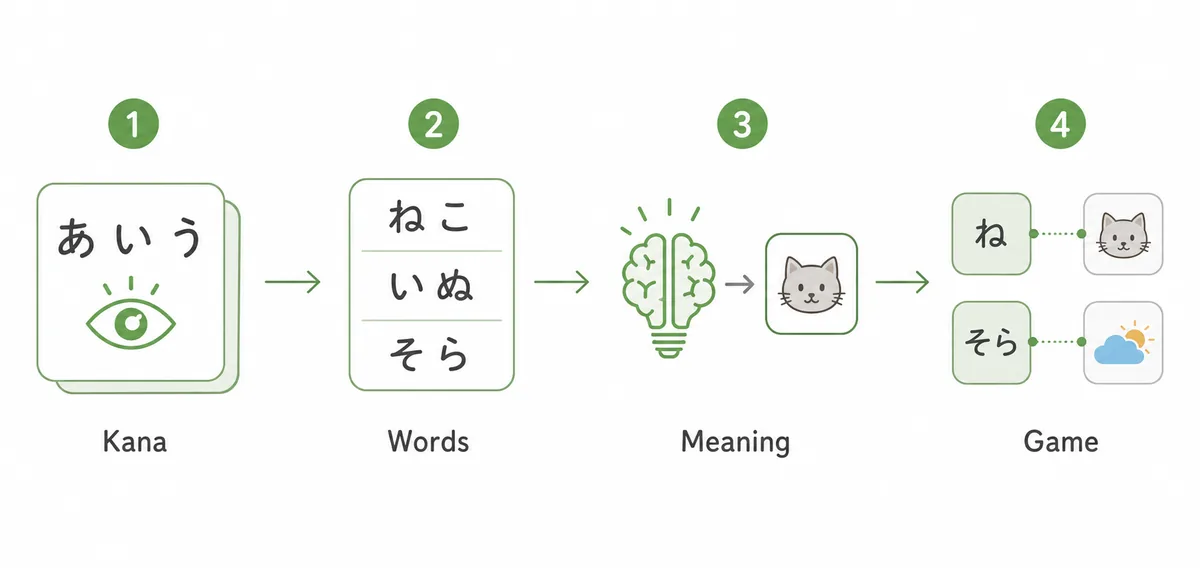
The mistake many learners make is collecting hundreds of words before they can recall ten of them. A better route is smaller: recognize the kana, read the word aloud, recall the meaning, then use the word in a constraint such as length, first sound, or final sound. That constraint is what makes word games useful. If you want a guided bridge from individual kana to short words and sentences, use the hiragana reading practice guide before expanding the list.
- Pick 8 to 12 hiragana words from one category, such as animals, places, or greetings.
- Read only the hiragana first. Hide romaji until you are stuck.
- Say the meaning aloud, then make a short phrase if possible.
- Sort the words by length: 2 kana, 3 kana, 4 kana, and longer phrases.
- Use short words for speed drills and four-kana words for game-style recall.
How hiragana words help with Japanese word games
Hiragana word practice fits naturally with Japanese word games because the game board forces you to think about sound order. In Kotobade Asobou, you work with short kana shapes rather than long translation lists. That makes it useful after you have already learned a starter set of words.
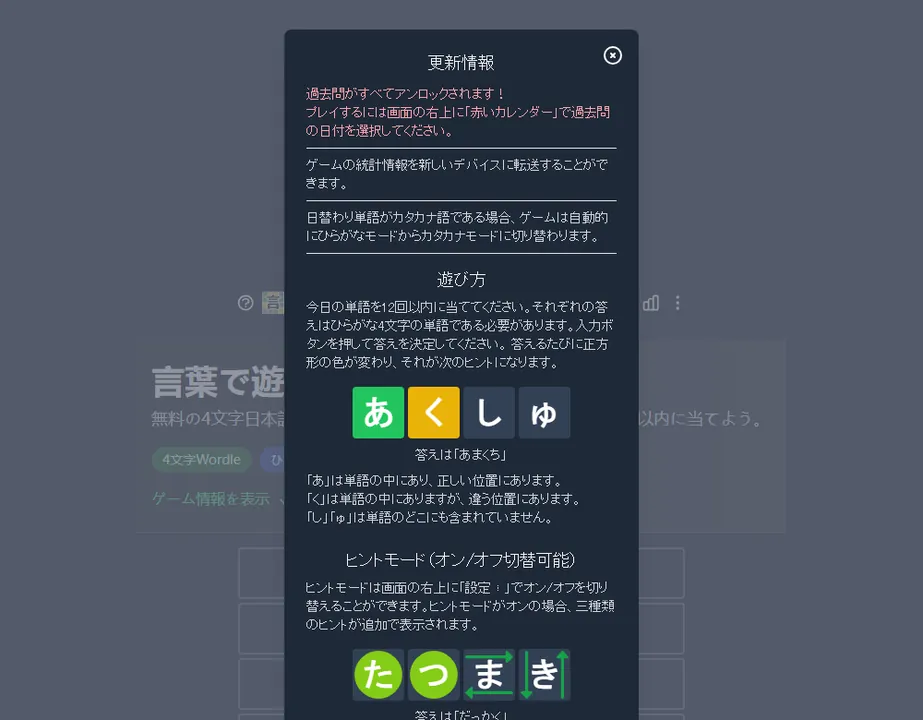
If you want a smoother path, use this order: first learn two- and three-kana words for reading speed, compare the same sounds with the katakana chart, then study four-letter Japanese words for the game board, and finally read the Japanese Wordle guide when you want to understand color hints and strategy. For chain games, the shiritori word list is better because final kana matters more than fixed word length.
Which keyword intent belongs here?
This page is meant for "hiragana words", "words written in hiragana", and "common Japanese words in hiragana". It is not trying to replace a full dictionary or a broad Japanese vocabulary course. If your goal is broad beginner vocabulary, use the basic Japanese words guide. If your goal is a word game, use the four-letter and five-letter word lists.
| Search need | Best page | Reason |
|---|---|---|
| hiragana words | This page | Kana-first list with romaji, meanings, and practice notes |
| hiragana chart | Hiragana chart | Basic rows, voiced sounds, combined kana, and practice order |
| katakana chart | Katakana chart | Katakana rows, voiced sounds, combinations, and practice order |
| common Japanese words in hiragana | This page | Beginner words displayed in hiragana for reading practice |
| basic Japanese words | Basic Japanese Words | Broader category vocabulary and review order |
| Japanese Wordle words | Japanese Wordle guide | Game rules and strategy context |
| shiritori words | Shiritori word list | Word-chain play depends on ending kana |
FAQ
What are hiragana words?
Hiragana words are Japanese words shown in hiragana. Some are normally written in hiragana, while others may have kanji forms that learners meet later. For beginners, the hiragana form is useful because it trains kana reading and pronunciation.
What are good first hiragana words?
Good first words are short, concrete, and easy to picture: あお, いえ, ねこ, いぬ, そら, くも, みず, はな, やま, and くるま. Then add reusable expressions such as はい, いいえ, こんにちは, ありがとう, and すみません.
Should I use romaji when learning hiragana words?
Romaji can help at the very beginning, but it should be temporary. Read the hiragana first, use romaji only to check pronunciation, and move toward recognizing the kana shape directly.
Are words written in hiragana different from Japanese words?
They are not a separate language category. They are Japanese words displayed in hiragana. Some words are usually written in kana, while other words may later be written with kanji. The hiragana version is especially useful for beginner reading practice.
Can hiragana words help with Japanese Wordle?
Yes. Short hiragana words help you think about kana order, vowels, repeated sounds, and word length. For a Wordle-style game, focus on four- and five-kana words rather than long greetings.
Summary
Hiragana words are the step between a kana chart and real Japanese reading. Start with short words, then common everyday expressions, then word-length practice. Keep romaji as a support, but train yourself to recognize the hiragana first.
Once a small group feels familiar, use a short word game to test recall. The goal is not to memorize every Japanese word in hiragana at once. The goal is to read the kana, remember the meaning, and bring the word back when a game or conversation gives you a clue.
Practice hiragana word recall
After learning a small set of hiragana words, try a compact word game. Kotobade Asobou helps you practice short Japanese word shapes and daily kana recall.
Play Kotobade AsobouSources and further reading
SERP structure and topic coverage were checked against Tofugu's Learn Hiragana guide, MARUGOTO Plus hiragana practice from the Japan Foundation, Tae Kim's hiragana guide, Tae Kim's hiragana practice exercises, and beginner vocabulary lists such as Coto Academy's basic Japanese words. This page reorganizes the topic around kana-first recall and word-game practice rather than copying any single list order.