Japanese Colors: Names, Kanji, and Everyday Examples
Learning Japanese colors gives you a useful set of words for shopping, describing people and places, reading menus, and playing vocabulary games. The quickest route is to learn each color in three forms: the Japanese spelling, the kana reading, and one natural phrase. This guide explains the basic color names in Japanese, shows kanji and romaji, and points out the places where a direct English translation can be misleading.
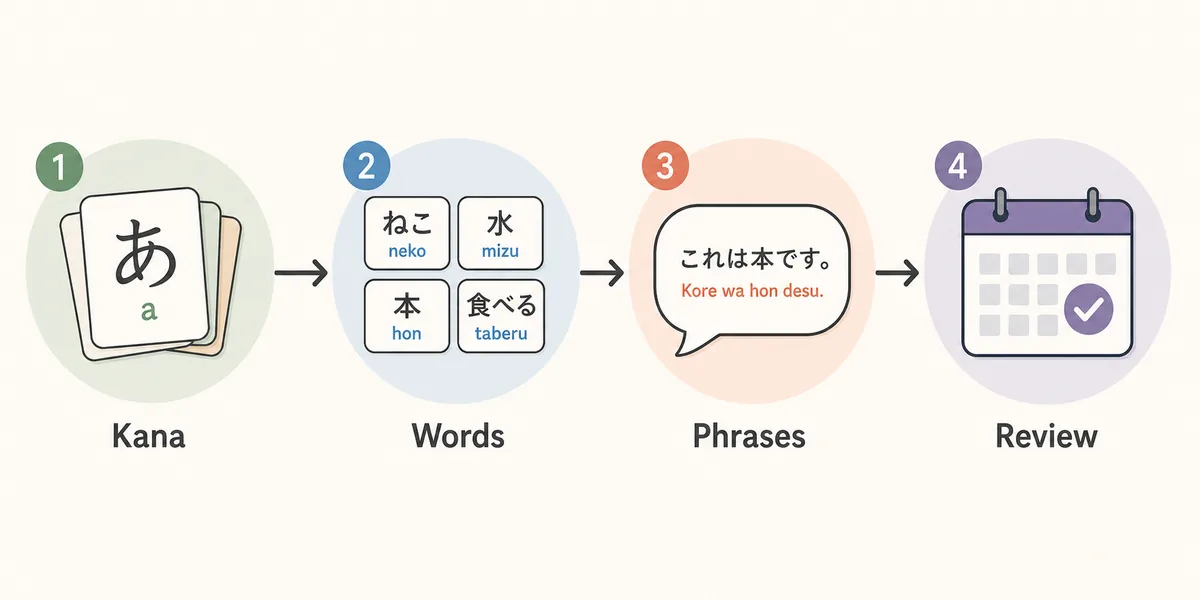
Basic Japanese colors with kanji, kana, and romaji
Japanese color vocabulary mixes short native words with compounds and a few loanwords. The short words are worth learning first because they appear in everyday descriptions and combine easily with other nouns. The table uses a common modern reading; a dictionary or product label may show a slightly different shade name.
| Color | Kanji or spelling | Kana | Romaji | Example idea |
|---|---|---|---|---|
| white | 白 | しろ | shiro | 白い紙 — white paper |
| black | 黒 | くろ | kuro | 黒い猫 — a black cat |
| red | 赤 | あか | aka | 赤い花 — a red flower |
| blue | 青 | あお | ao | 青い空 — a blue sky |
| yellow | 黄色 | きいろ | kiiro | 黄色いバナナ — a yellow banana |
| green | 緑 | みどり | midori | 緑の葉 — a green leaf |
| purple | 紫 | むらさき | murasaki | 紫の花 — a purple flower |
| brown | 茶色 | ちゃいろ | chairo | 茶色の靴 — brown shoes |
| gray | 灰色 | はいいろ | haiiro | 灰色の雲 — gray clouds |
| light blue | 水色 | みずいろ | mizuiro | 水色のシャツ — a light-blue shirt |
| pink | ピンク | ぴんく | pinku | ピンクの花 — pink flowers |
| orange | オレンジ | おれんじ | orenji | オレンジ色 — orange color |
| gold | 金色 | きんいろ | kiniro | 金色の星 — a gold star |
| silver | 銀色 | ぎんいろ | giniro | 銀色の指輪 — a silver ring |
For a first review, memorize the first seven rows and then add two compound words such as 水色 and 茶色. This gives you a useful range without turning the list into an unconnected vocabulary dump. When a word is written only in katakana, such as ピンク, practice reading the kana rather than forcing a kanji equivalent.
How to use colors in Japanese phrases
Many beginner mistakes come from treating every color as the same part of speech. The short words 赤, 青, 白, and 黒 have familiar adjective forms ending in い: 赤い, 青い, 白い, and 黒い. They can come directly before a noun, as in 白い紙. Other color words are often followed by の, as in 緑の葉 or 紫の花.
| Japanese phrase | Romaji | Meaning | Pattern |
|---|---|---|---|
| 赤いりんご | akai ringo | a red apple | い-adjective + noun |
| 青い空 | aoi sora | a blue sky | い-adjective + noun |
| 黄色い花 | kiiroi hana | a yellow flower | 黄色い + noun |
| 緑の葉 | midori no ha | a green leaf | noun + の + noun |
| 紫の傘 | murasaki no kasa | a purple umbrella | noun + の + noun |
| この色が好きです | kono iro ga suki desu | I like this color. | 色 as a noun |
The word 色 is read iro when it means color in a phrase such as 何色 (what color) or 色の名前 (color name). It is not necessary to add 色 after every basic word. 赤い and 青い already work naturally, while shade names such as 水色 and 茶色 include it as part of the compound.
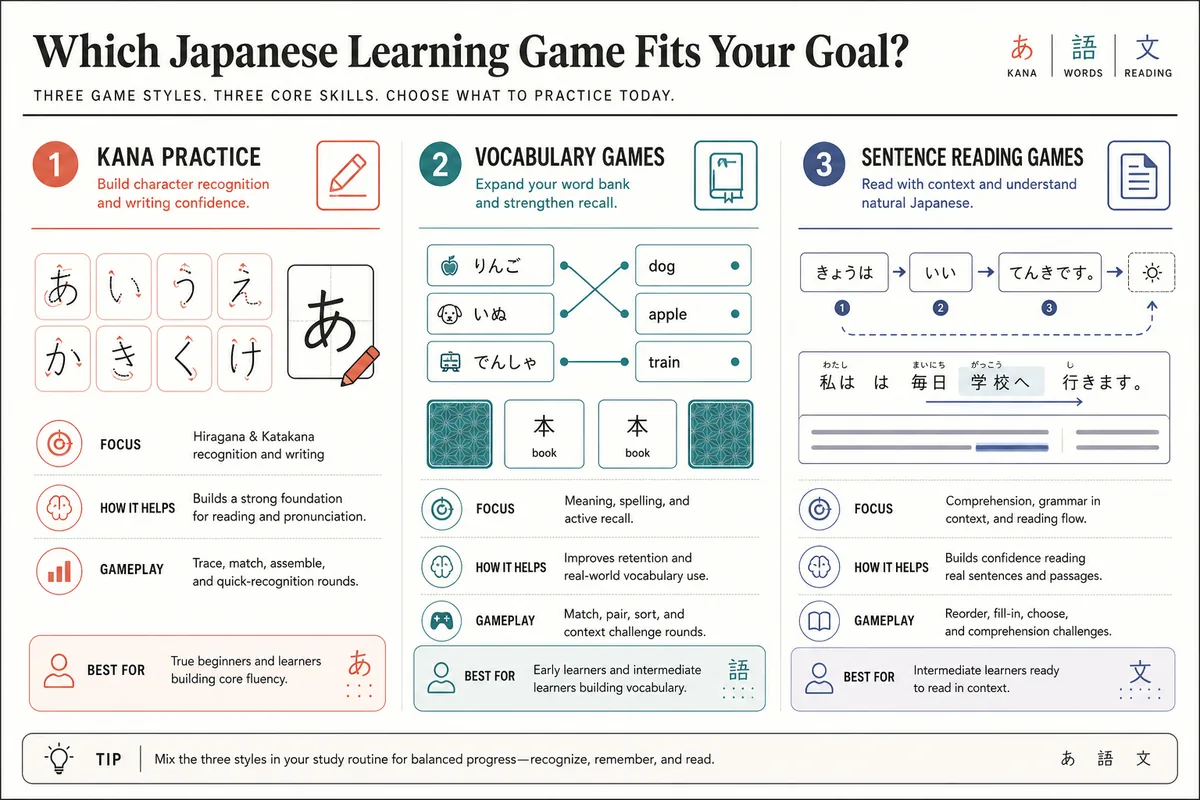
Common shades, loanwords, and cultural notes
Japanese has many traditional shade names, but a beginner does not need to memorize every one at once. Start with the productive pattern 色 plus a familiar noun: 桃色 is peach or soft pink, 水色 is light blue, 茶色 is brown, and 金色 and 銀色 are gold and silver. These compounds are useful because their parts give you a memory clue.
Pink in Japanese
ピンク (pinku) is the everyday loanword. 桃色 (momoiro) literally means peach color and can sound softer or more descriptive.
Yellow in Japanese
黄色 (kiiro) is the noun. Before a noun, you will often see 黄色い, as in 黄色い花. The extra い is part of the adjective form.
Blue and green
青 usually translates as blue, but it can describe young or unripe things and the traditional word 青信号 for a green traffic signal. Context matters.
Color and formality
Product descriptions and design talk may use a shade name plus 系, meaning a color family, or a katakana name. In daily conversation, a simple basic word is usually clearer.
Do not treat English color categories as perfectly identical to Japanese categories. A shop may label a fabric with a fashionable katakana shade, while a textbook teaches a basic native word. Both can be correct in their setting. Learn the word that matches the object, sentence, or game you are using.
A practical study routine for Japanese colors
Color vocabulary sticks when you connect sound, shape, and meaning. A short routine is more useful than copying a long list once. The steps below work for beginners and can also be adapted to a Japanese word game.
- Read the kana aloud. Say あか, あお, and しろ before looking at the English. If kana is still new, use the site's hiragana chart and reading practice to check the sounds.
- Attach one visual object. Pair 黄色 with a banana, 緑 with a leaf, and 青 with the sky. Concrete images make the vocabulary easier to retrieve.
- Build a short phrase. Use an adjective form such as 赤い花 or a noun phrase such as 水色のシャツ. Phrase practice shows you which words take い and which use の.
- Review in two directions. Cover the English and recall the Japanese, then cover the Japanese and recall the meaning. Add romaji only as a temporary bridge; the goal is to read kana directly.
- Use a small game. Sort cards by color, match a word to a picture, or use a daily Japanese Wordle-style round for kana practice. The site's Japanese learning games guide compares different practice styles, while Basic Japanese Words adds broader vocabulary.
Japanese colors FAQ
What are the basic colors in Japanese?
The most useful starting set is 白 shiro (white), 黒 kuro (black), 赤 aka (red), 青 ao (blue), 黄色 kiiro (yellow), 緑 midori (green), and 紫 murasaki (purple). Learn each with kana and one phrase.
How do you say pink in Japanese?
The everyday word is ピンク (pinku). 桃色 (momoiro) is another useful word for a peach or soft-pink shade.
How do you say yellow in Japanese?
Yellow is 黄色 (kiiro). Before a noun, use 黄色い, as in 黄色い花 for “yellow flower.”
Should I say 赤 or 赤色?
Both can be correct. 赤 is the concise everyday color word, while 赤色 makes “red color” explicit and may appear in lists, labels, or comparisons. Choose the form that fits the sentence.
Does 青 mean green sometimes?
Yes. 青 usually means blue, but Japanese uses it in a few traditional or contextual expressions for things English speakers may call green, such as an unripe fruit or a traffic signal. Read the whole noun phrase.
Summary
Start Japanese color study with the short words 白, 黒, 赤, 青, 黄色, 緑, and 紫. Then add shade compounds such as 水色, 茶色, and 金色. The most useful habit is to learn each word inside a phrase, because the phrase teaches you whether the color behaves like an い-adjective or connects with の. For more kana and vocabulary practice, continue with the site's Japanese phrases, hiragana words, and daily Japanese word game.